
Advanced Intelligence, from Aristotle’s Circle to Iran’s Future
Why are international talent networks focusing on Gen Z? This article traces the idea of knowledge networks and describes Sirir’s approach to futures education, digital identity and real projects for young people in Iran.
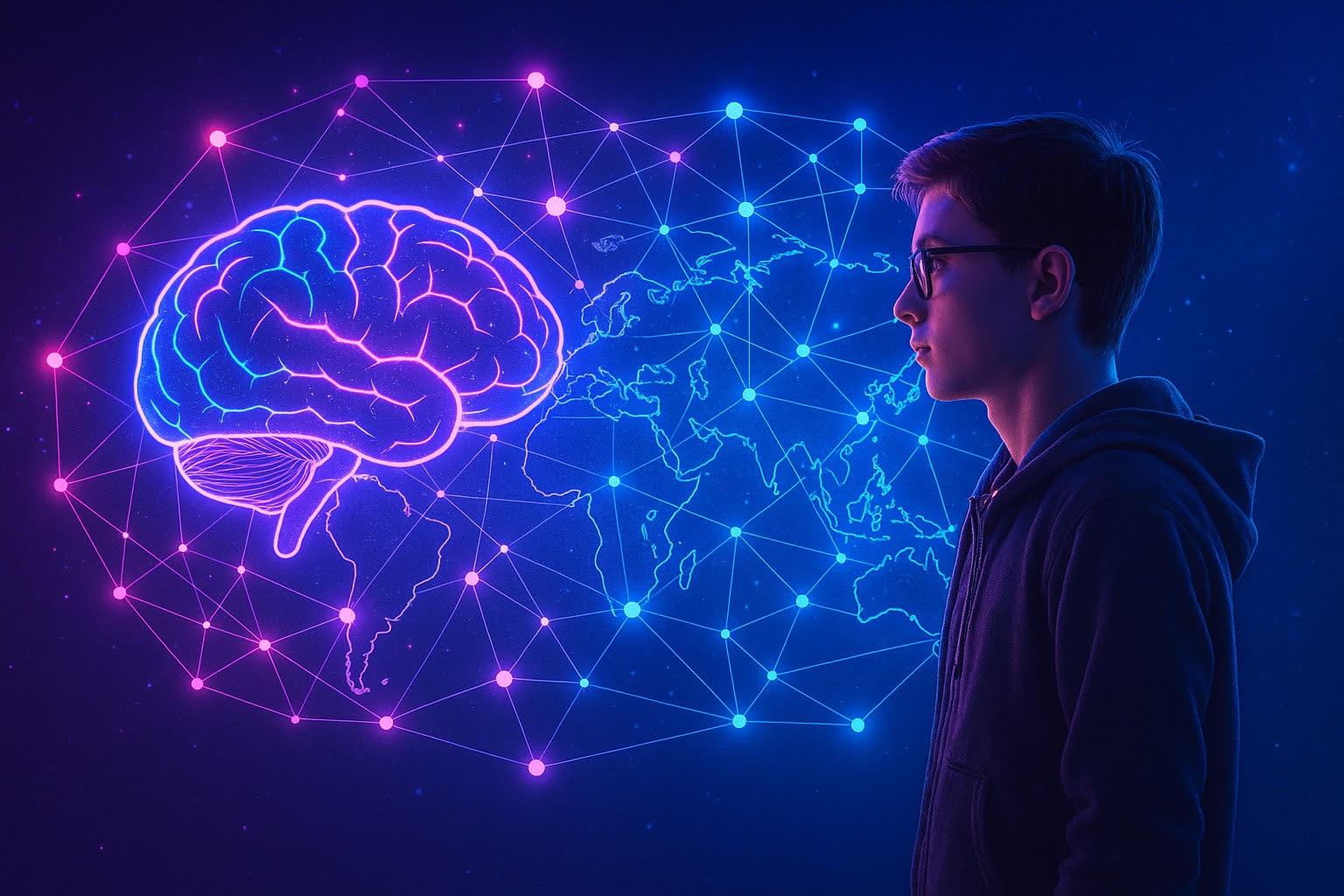
From Aristotle and the School of Athens onward, societies have sought to identify, connect and develop people capable of shaping the future. Philosophical circles in Athens and Baghdad, the Royal Society in London and MIT reflect a continuing ambition to build the future with people who think beyond their own time.
In a world of AI, rapidly developing technologies and platform economies, intelligent human networks are increasingly important. The focus now includes Gen Z, young people born into the digital world.
Distributed intelligence and the need for structure
The generation born in Iran between Solar Hijri years 1375 and 1390 has unprecedented access to global information, digital income opportunities and future-oriented ideas. Curious and attentive to meaning, many still lack a structured pathway for applying their abilities.
Historical knowledge networks
- Aristotle’s school, founded in 335 BCE, connected philosophy, physics, politics and ethics.
- Baghdad’s House of Wisdom brought translation, astronomy, algebra and mathematics together.
- The seventeenth-century Royal Society in London became an institution of modern science, with members including Newton and Darwin.
- Twenty-first-century institutions include MIT, Singularity University and private technology-led talent networks.
Sirir and future pathways in Iran
SIRIR.ir combines futures education, digital skills, talent development pathways and connections to regional and global projects in an ecosystem for curious young Iranians.
The article describes participants who, within less than a year, earned their first dollar-denominated income from online projects, built a professional digital identity, collaborated with young people from other countries on research and exhibition projects, and practiced systems thinking and personal project management.
Gen Z learning topics
- Futures studies in the language of Gen Z.
- Systems thinking and scenario design.
- Digital identity and personal branding.
- AI, web technologies and data analysis tools.
- Digital income models, including freelancing, exports and startups.
- Project-based learning with international tools.
- Regional markets and global exhibitions.
Conclusion and abstract
Gen Z wants to create meaning, gain experience and make an impact. Sirir offers an ecosystem for growth, connection and building the future. Drawing on the long history of talent networks, it brings together futures studies, digital skills, personal development and access to global markets to activate young people’s potential.
The one-year program is described as being for participants aged 13–29. The article reports that dozens of participants have developed digital identities, earned dollar-denominated income and entered international networks. Families and young people can request a free consultation through SIRIR.ir.
Mahyar Babazadeh, summer 1404 in the Solar Hijri calendar.
Comments